
Chicken Fillet: How to Cut Your Own and Save Money
How to cut chicken fillet from a whole bird, how much meat each carcass yields, and what it really costs per kilo. Plus storage and stock from the bones.

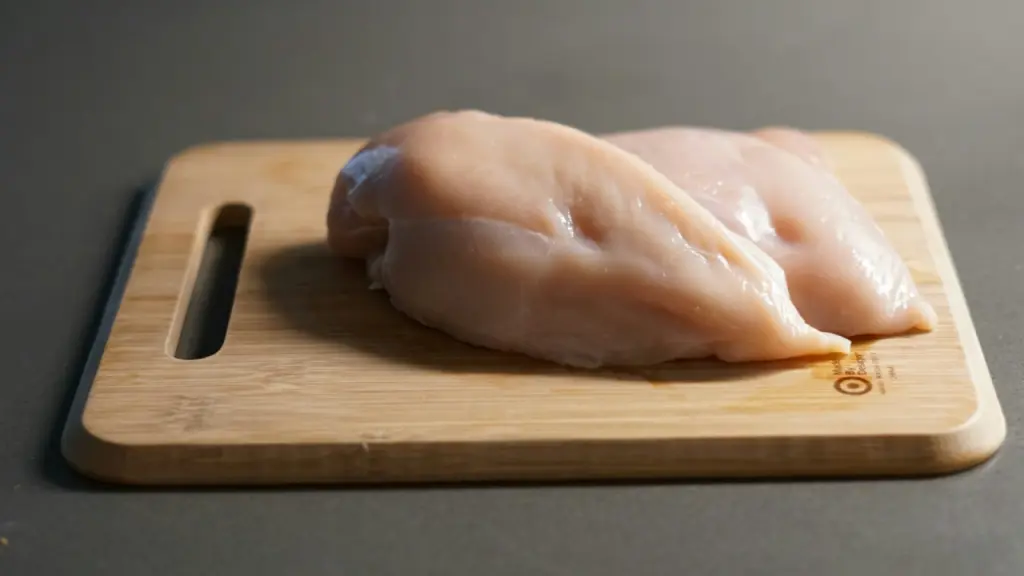
A chicken fillet is a boneless, usually skinless cut, most often taken from the breast. Cutting your own from a whole bird needs nothing more than a sharp knife and a board. The savings only show up if you use the thigh meat, bones, and skin too, instead of throwing them away.
Packaged fillet always looks expensive in the chiller. The question rarely answered with actual numbers: what does a chicken fillet really cost if you cut it yourself from a whole bird?
Contents
The answer rests on two things, the price of chicken that day and how much meat you can genuinely lift off one carcass. Both can be calculated, and the result is sometimes surprising.
This article covers the technique step by step, fillet yield based on research data, a cost calculation using official price panel figures, then how to use the leftover bones so nothing is wasted.
What is a chicken fillet?
A fillet is a cut of meat without bone. On a chicken, the term almost always means breast meat lifted off the keel and rib bones, with the skin discarded. The texture is firm, the color pale, and this is the cut used for chicken steak, katsu, nuggets, and stir-fries.
Thighs can be filleted too, and the result often tastes better. Thigh meat carries more fat within the fibers, so it does not dry out quickly when fried or roasted. A thigh fillet is the safer choice for anyone not yet used to judging cooking times.
One small piece gets missed constantly: the tenderloin, the thin strip of muscle attached to the inside of the breast. It weighs only about 30 grams, but it is the most tender part of the whole bird. Pull it off and cook it separately rather than mixing it with the thicker breast fillet, because the cooking times differ.
If the names of the different cuts at the butcher counter still blur together, there is a full list in 10 types of chicken carcass cuts.
How do you fillet the breast and thigh from a whole chicken?
The order is always the same: take off the limbs first, then separate the breast from the bone. One sharp medium kitchen knife is enough, and you do not need a butcher's blade.
Before you start, pat the surface of the bird dry with paper towel. A slippery chicken makes the knife slide. Do not wash raw chicken under the tap. The Minnesota Department of Health, in its guidance "Don't Wash Your Chicken" (updated 15 July 2026), states that washing chicken, even with a slow stream of water, can cause dangerous germs to splash from the raw meat onto other surfaces, where they can get onto foods that will not be cooked, such as lettuce. Cooking to a safe temperature kills the germs present, so meat does not need washing.
The steps:
- Set the bird breast side up. Pull one thigh out to the side until the hip joint opens up, then cut the skin in the fold between thigh and body.
- Rotate the thigh outward until the joint pops. The click tells you the bone has left the socket. Cut through whatever tissue still holds it. Repeat on the other side.
- Remove the wings the same way at the shoulder joint. Set them aside for stock, since they carry little meat and plenty of bone.
- Feel for the keel bone down the center, then make a straight cut along one side of it until the knife touches bone.
- Follow the contour of the bone with the blade almost flat, using short sweeps while pulling the breast meat away with your other hand. Let the bone guide the knife, not the reverse. Repeat on the other side.
- Pull off the tenderloin, still attached to the bone or to the inside of the fillet, and keep it separate.
- Fillet the thigh. Lay it skin side down, feel for the bone, cut along its length, then peel the meat away from both sides. Cut through the joint at the end if needed.
- Remove the skin for a lean fillet, or keep it to crisp up as a topping.
Three small habits make the result neat. First, put the bird in the freezer for about 15 minutes before filleting; slightly firmed meat is far easier to slice. Second, slice against the grain when cutting the fillet into sheets, so the texture stays tender. Third, keep the thickness even from end to end so it cooks evenly.
Use a separate board for raw chicken, and wash the knife and board with hot soapy water before they touch anything else.
How much fillet do you get from one whole chicken?
Roughly speaking, less than half the carcass weight. A study by Resa Rosliana Dewi, Iwan Setiawan, and Wendry Setiyadi Putranto in the Jurnal Ilmu Ternak Universitas Padjadjaran, December 2024 issue, weighed the carcass parts of 35-day-old Cobb broilers raised in a closed house. Slaughter weights ran 1.99 to 2.10 kg and carcass weights 1.81 to 1.85 kg, with carcass percentage averaging 73 to 74 percent of live weight.
From that carcass, the scales showed:
| Part | Weight per carcass | Approximate share of carcass |
|---|---|---|
| Boneless breast meat | 515–548 g | about 29% |
| Boneless thigh meat | 303–348 g | about 18% |
| Whole breast (bone in) | 708–795 g | about 41% |
| Whole thigh (bone in) | 494–553 g | about 28% |
| Wings | 176–185 g | about 10% |
| Back | 386–443 g | about 23% |
The last column is our own calculation from the study's averages, and those parts are not meant to add up to exactly 100 percent.
What matters in the kitchen: for every 1 kilogram of carcass, you realistically get about 290 grams of breast fillet and 180 grams of boneless thigh meat. That is roughly 470 grams of ready-to-cook meat, with the rest bone, skin, and connective tissue.
Those figures shift with strain, slaughter age, and how careful your hands are. On a free-range local bird, which is leaner and bonier, the meat share is usually smaller. Birds slaughtered younger and lighter also give a lower breast yield.
Is it cheaper to buy fillet or cut your own?
It depends on whether you use the whole bird. If only the breast fillet gets used and the rest is thrown out, cutting your own is actually expensive.
Take real numbers. The Food Price Panel run by Indonesia's National Food Agency, at consumer level, national average, recorded broiler chicken meat at Rp37,190 per kilogram on 19 November 2026. With the yields above:
- Counting the breast fillet only. One kilogram of carcass at Rp37,190 yields about 290 grams of breast fillet. The effective cost is Rp37,190 divided by 0.29 kilograms, or roughly Rp128,000 per kilogram of fillet.
- Counting the thigh meat too. The same kilogram of carcass yields about 470 grams of boneless meat. The effective cost is Rp37,190 divided by 0.47 kilograms, or roughly Rp79,000 per kilogram.
- Counting the bones, wings, and back for stock, the cost per kilogram of meat falls further, because an ingredient you would normally buy separately is already covered.
That Rp79,000 per kilogram figure is the benchmark to carry to the shop. Compare it against the price label on packaged breast fillet the same day, and the decision makes itself.
| Comparison | Figure |
|---|---|
| Broiler chicken meat, consumer level, national, 19 November 2026 | Rp37,190/kg |
| Home-cut fillet cost if all the meat is used | about Rp79,000/kg |
| Home-cut fillet cost if only the breast is used | about Rp128,000/kg |
| Promo breast fillet price in the Superindo catalog, 11 October 2026 | Rp66,900/kg (Rp6,690 per 100 grams) |
That promo price sits below the cost of home-cut fillet. So if all you need is breast fillet, packaged fillet on promotion is the cheaper buy. Cutting your own only wins when the thigh, bones, and skin get used too.
This calculation uses a price from one date and yields from one study. Panel prices update daily and differ between provinces, so run the numbers again with the price at your own market. What does not change is the logic: the value of a whole bird sits in all of its parts, not in the breast alone.
For anyone cooking to sell, there is one extra benefit the table misses. Cutting your own gives control over portion size. Sheets of 80 grams for crispy chicken, or 120 grams for a steak, are much harder to standardize when you buy packaged fillet in assorted weights.
What can you do with the leftover bones and skin?
Turn them into stock, and cook it the same day. The keel bone, ribs, back, wings, and thigh ends make up nearly half the carcass weight. All of it carries the collagen and marrow that give flavor.
The simplest route: roast the bones briefly until browned, put them into cold water with onion, carrot, spring onion, and a few peppercorns, then simmer gently without a rolling boil for 1.5 to 2 hours. Skim the foam that rises early on. Strain, cool, then freeze in small portions.
Skin you are not using can be rendered in a dry pan over low heat, with no added oil, until crisp. The fat that comes out keeps well for frying.
Done this way, one whole chicken delivers three things at once: fillet for the main dish, thigh meat for soups or stir-fries, and stock for the next day. Ideas for using the other cuts are in how to prepare chicken cuts.
How should you store fillet safely?
Chill it promptly, split it into single-meal portions, and never let it sit out at room temperature. WHO food safety advice (18 August 2023) says cooked food should not be left out for more than two hours, the fridge should stay under 5 degrees Celsius, and leftovers should be reheated until steaming hot.
For raw fillet:
- Store it on the lowest shelf of the fridge, in a sealed container, so the juices cannot drip onto other food.
- Use it within 1 to 2 days if it is only chilled.
- Freeze it in thin, flat portions rather than one solid block, so it freezes and thaws quickly.
- Label it with the date. Without labels, a freezer always ends up a guessing game.
- Thaw it in the fridge, not on the counter or in hot water.
WHO also advises cooking to at least 70 degrees Celsius, and for meat and poultry the juices should run clear, not pink. Thin breast fillet reaches that point fast, so overcooking is the more common problem, not undercooking. For storing whole carcasses, there is a separate guide on storing chicken carcass.
FAQ
Is chicken fillet always breast meat?
No. Fillet simply means boneless, and thighs can be filleted as well. In Indonesian markets, a label reading only "fillet" almost always means skinless boneless breast, while boneless thigh is usually labeled "fillet paha" or "boneless thigh".
How long is chicken fillet safe in the fridge?
Raw fillet is best used within 1 to 2 days in an ordinary fridge. For longer storage, freeze it. Cooked fillet follows the general WHO rules: do not leave it at room temperature for more than two hours, keep it below 5 degrees Celsius, and reheat it until steaming hot before serving again.
Should you wash chicken before filleting it?
No, and it is better not to. Minnesota Department of Health guidance states that washing chicken can splash germs onto other surfaces in the kitchen, and that cooking to a safe temperature already kills the germs present. Just pat the surface dry with paper towel, then wash your hands right away.
Why does my breast fillet always turn out dry?
Because breast meat carries almost no fat between its fibers, so the line between cooked and dry is very thin. Pound the fillet to an even thickness, cook it briefly over medium-high heat, then let it rest before slicing. If it still gives you trouble, switch to thigh fillet, which is far more forgiving.
Which is cheaper, a whole chicken or packaged fillet?
A whole chicken costs less per kilogram, but not all of that weight is edible. By the calculation in this article, home-cut fillet works out at roughly Rp79,000 per kilogram when the thigh meat is used too, based on panel prices for 19 November 2026. For comparison, the Superindo promo catalog for 11 October 2026 listed breast fillet at Rp6,690 per 100 grams, or about Rp66,900 per kilogram. Compare those figures against the price label at your own shop on the same day.
Choosing chicken fillet comes down to arithmetic rather than shopping instinct. Weigh your own fillet yield from one whole bird just once, write the number down, then divide it by the price of chicken that day. The figure you get will serve you better than any estimate, and the bones still become stock for tomorrow.


