Indirect Dental Veneers: Benefits, Side Effects and Procedure
Thinking about indirect veneers? Learn their benefits, possible side effects and what happens at each of the three dental visits.

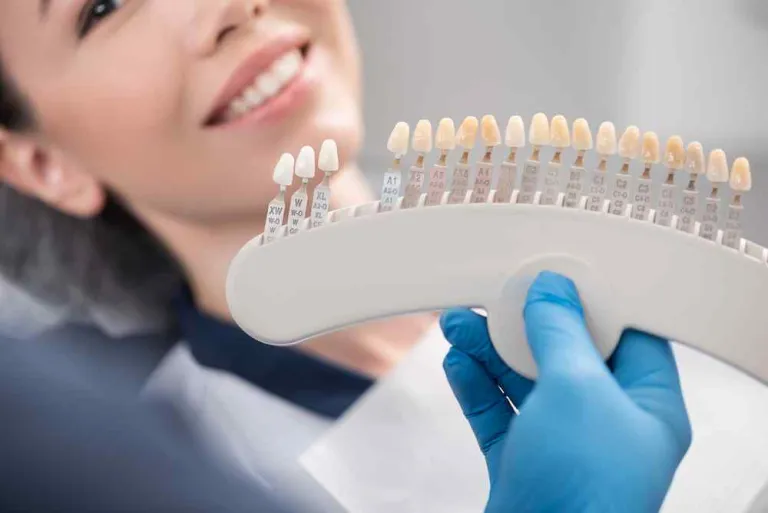
Anyone can get dental veneers, including you if you want a better-looking smile. In general, you can choose between direct veneers and indirect veneers. Most people prefer indirect veneers because of their quality, even though they cost more. But for all their quality, indirect veneers come with side effects as well as benefits.
Contents
Benefits of indirect dental veneers
- Veneers make your teeth look more attractive.
- The veneer process is less complex than making a dental crown.
- Veneers make the shape and color of your teeth more proportional.
- The porcelain shade can be customized so your teeth look whiter.
- Porcelain veneers resist stains well.
- Gum tissue adapts well to porcelain.
- Veneers give your teeth a natural look.
Side effects of indirect dental veneers
- Teeth with veneers can still develop decay.
- Veneers are not the right solution if you have active gum disease.
- Although the chances are small, veneers can shift or even come off. For that reason, you should avoid biting your nails or pencils and chewing ice or other hard objects.
- Sometimes the veneer color does not match your other teeth, and it cannot be changed.
- Your teeth may become more sensitive to hot food and cold drinks. This is caused by the enamel removal done before the veneers are placed.
- If a veneer cracks or breaks, it cannot be repaired.
- Porcelain veneers cost more than composite veneers.
- Dental veneers are not reversible.
Indirect dental veneer procedure
Getting dental veneers usually takes three visits to the dentist. At the first visit, you simply have a consultation with the dentist. The veneers are then made during your second visit, and they are placed at your third visit. Here is what happens at each of the three stages.
- Diagnosis and planning
At the first visit, your dentist will ask what kind of result you want from your veneers. The dentist will then examine your teeth to decide which type of veneer suits you.
Once the exam is done, the dentist will explain the procedure to you. At this stage, the dentist will also take X-rays to see the overall condition of your teeth and mouth.
- Preparation
At your second visit, the dentist will prepare your teeth for the veneers. This time, the dentist will remove about 0.5 mm of enamel, the outermost layer of your teeth. Removing this layer of enamel makes room for the veneer. The dentist will then create a model, or impression, of your teeth. This impression is used to make your veneers.
- Placement
Veneers have to be placed carefully, because once they are on, they cannot be repositioned, let alone removed. That is why, before bonding them, the dentist will place the veneers temporarily to make sure they sit proportionally and match the color of your teeth.
Once everything fits, the dentist moves on to the final step of the veneer procedure: placement. First, the dentist applies cement to bond the veneer to your tooth. The dentist then positions the veneer proportionally. To make the veneer bond more firmly to the tooth, a special light is used to harden the cement.
Also read Teeth Whitening at a Dental Clinic vs. a Beauty Clinic