5 Types of Chicken Cuts Every New Business Owner Must Know
Learn the types of chicken cuts, from whole and half carcasses to quarters and 8, 10, 12 or 14 pieces, plus hygiene and knife tips for cutting chicken.

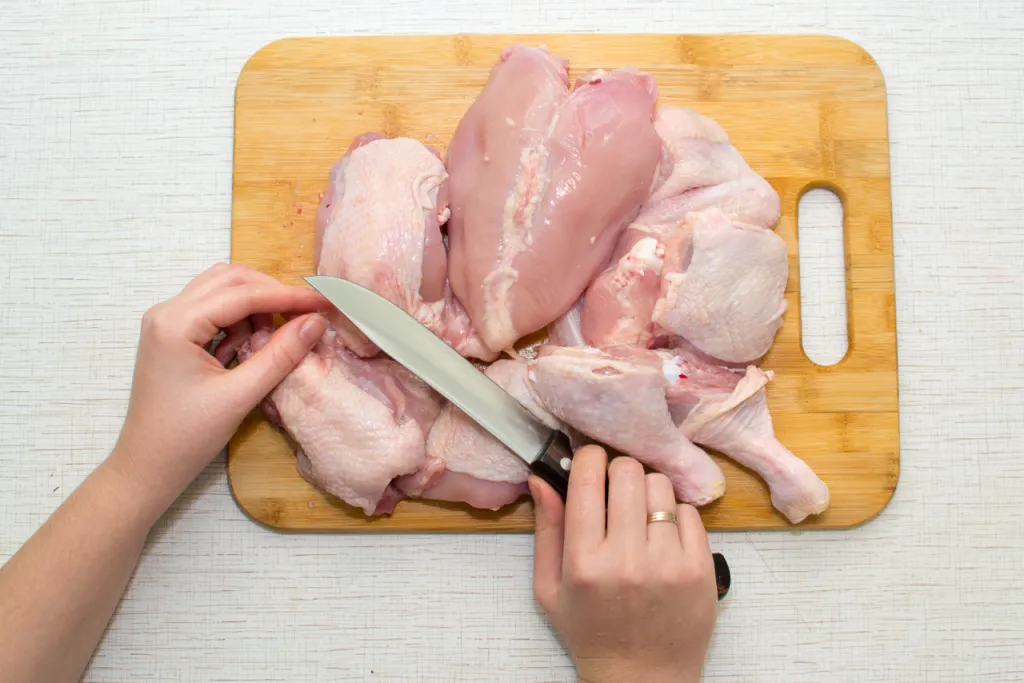
New business owners need to know the different types of chicken cuts and what each one involves. The wrong cut only leads to complaints and hurts your business going forward. Customer needs vary, so they do not just want one type of cut. Business owners should keep in mind that some customers want only specific chicken parts, while others want a chicken carcass cut into a specific number of pieces. Each type of cut is priced differently.
Ask customers whether they want a particular carcass part or a carcass cut into a set number of pieces, so there are no misunderstandings or complaints.
Also read Chicken Carcass Business Tips for Bigger Profits
Chicken Carcass Cuts
Here are several types of chicken cuts, with explanations, that business owners, especially beginners, really need to know:
- Whole chicken carcass
The first type is the whole carcass. Whole chicken carcasses are often used for ater-ater (the Javanese custom of sending food to neighbors and relatives) at thanksgiving gatherings or celebrations. Their price varies with the weight of the carcass.
- Halves
A half cut is a whole chicken carcass split into two equal parts. This type of cut is widely used at wedding receptions, for ater-ater at thanksgiving gatherings and on similar occasions. Carcass sellers need to know how to cut a whole carcass into two equal halves. A cutting mistake will leave the pieces uneven in size.
- Quarters
Besides halves, there are quarters. This cut is also used for ater-ater or wedding receptions. To make it, divide the halved carcass so you end up with four equal pieces.
- Eight-Piece Cut
This cut is smaller than a quarter, which makes it a good fit for boxed rice meals or dishes served to guests. Many sellers still cannot cut a carcass into eight equal pieces, so they need to keep practicing until the pieces come out uniform.
- Other Cuts
Beyond the eight-piece cut, there are a few more types of chicken cuts that new carcass sellers should know. There is a ten-piece cut, which suits personal consumption, as well as twelve-piece and fourteen-piece cuts. Beyond fourteen pieces, carcass sellers should not cut the chicken any smaller, because the meat will fall apart easily when cooked. Cutting more than fourteen pieces is also difficult, especially for beginners.
Also read What Makes a Chicken Carcass Business Succeed or Fail
What to Watch for When Cutting Chicken
Carcass sellers, especially beginners, need to pay attention to several factors that determine whether their cutting succeeds. Here is what to watch for when cutting a chicken carcass:
- Clean equipment
One thing to watch when cutting chicken is the cleanliness of the equipment you use, such as butcher knives, cutting boards and cutting mats. The meat you cut will be eaten by customers, so it must be kept truly clean.
- Personal hygiene
Personal hygiene during cutting matters too. Wear gloves and a mask so no germs get onto the meat. Also protect the meat from flies and other animals.
- A sharp knife
A sharp butcher knife is essential for clean cutting. Without one, the cuts will be messy and a lot of meat will be wasted.
- The right technique
To keep the meat from slipping while you cut, hold it with your left hand and the knife in your right. Be careful that the knife does not slip onto your hand.
Those are some types of chicken cuts, with explanations, that every business owner should know. We hope you find this information useful.