4 Chicken Carcass Business Tips for Beginners to Turn a Profit
Starting out? These chicken carcass business tips cover reading the market, knowing healthy birds, proper processing and the grit to keep going.

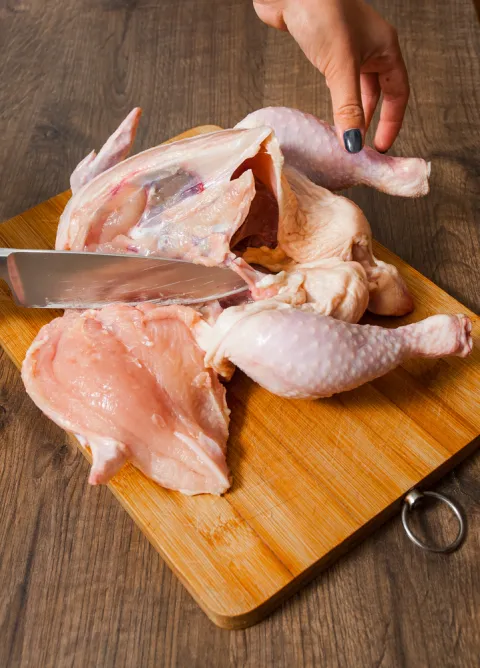
Chicken carcasses make an attractive business. In fact, the carcass trade goes hand in hand with chicken farming: farmers don't have to sell only live birds, because they can also sell carcass meat to their customers. If you deal only in day-old chicks (DOC) and live chickens, the service you offer is incomplete. The appeal of the carcass meat business is its wide market. On top of that, chicken prices that are relatively stable, even with some fluctuation, are another plus for this business.
Chicken Carcass Business Tips for Beginners
Beginners getting into the carcass business are strongly advised to follow some proven tips so their business meets their expectations. Newcomers don't yet have much experience in this field. Experience is the best teacher, so the more of it you have, the better for your business. Sharpening your skills is also essential here. Here are some chicken carcass business tips for success:
Read the Market
The first tip is to get good at reading market opportunities. You can do this by looking at things like customer tastes, the carcass products people want and so on.
Also read 7 Chicken Carcass Business Tips for Bigger Profits
Know Your Product Well
The next tip for beginners is to know the carcass meat you sell to customers inside out, including the signs of a healthy chicken. A healthy chicken produces healthy carcass meat, and if the bird you slaughter is unhealthy, the carcass meat will be unhealthy too. Here are the signs of a healthy chicken that will make healthy carcass meat:
- Steady appetite and thirst. The first sign of a healthy chicken is that it eats and drinks steadily. An unhealthy bird's appetite and thirst are irregular, and it may not touch its food and water at all. To make sure your carcass meat is healthy and high quality, avoid slaughtering chickens that are unwell.
- A sign of an unhealthy chicken is lethargy. Healthy chickens are lively and move around a lot. A lethargic chicken just stays in one spot with its eyes closed. If a bird in this state has not become active again, it is not yet fit for slaughter.
- A hoarse voice. One sign of a sick chicken is a hoarse voice. A hoarse chicken may be carrying a virus in its body. Until that virus weakens, a bird in this state is not fit for slaughter either.
Use the Right Process
To run a successful chicken carcass business, the farmer has to follow the right process. The wrong process will lower the quality of the carcass meat and leave it below standard. To produce carcass meat properly, healthy chickens must be slaughtered by hand. Once the bird is dead and fully bled, it is scalded in boiling water. After scalding, the feathers are removed, either with a plucking machine or by hand. Make sure there aren't too many feathers left on the carcass, so customers don't complain or get put off.
Don't Give Up Easily
A tip for making your chicken carcass business a success is not to give up easily. A businessperson can't afford to be a quitter. Business owners without mental toughness will struggle to get back up after they fall.
Also read 3 Steps to Prepare Healthy Chicken Carcass Cuts
Those are the key tips for beginners who want to succeed in the chicken carcass business. We hope this information is useful.